
What keychain purses reveal about campus safety.
https://pin.it/3Jn2nvszz
Phone, keys, wallet, and pepper spray; the nightly college mantra before you leave the house.
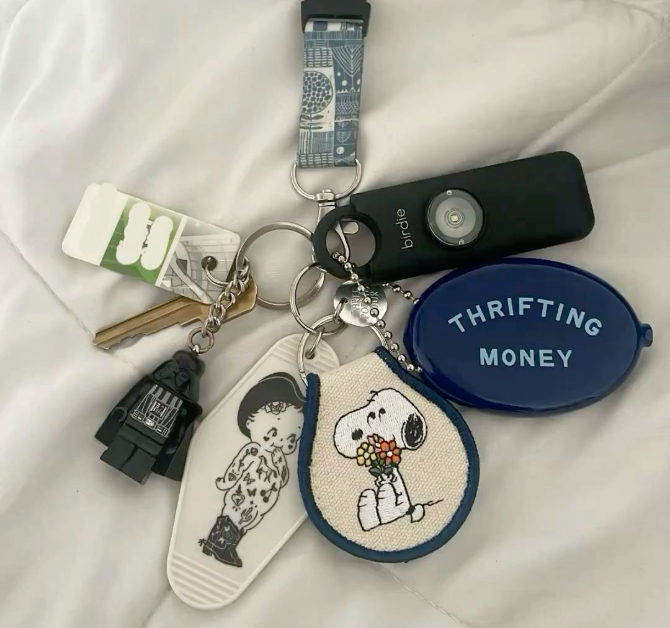
Often arranged on a color coordinated wristband or conveniently clipped to a purse, jingling along as you hike in those frat shoes begging to retire. Why do we accessorize personal safety devices alongside our viral lipgloss on keychains without another thought?
Safety concerns on college campuses are almost universally understood. Resources are plastered on bathroom stall walls and dark humor lightens hard conversations. Is this preparing us for or coping with an unfortunate reality, or resigning ourselves to it?
College is supposed to be the best four years of your life, but for women aged 18-24 it can also be the most dangerous, as women attending university are 3 times more likely than women in general to experience sexual violence, according to the Bureau of Justice Statistics.
In response to this reality, the personal safety market has exploded in recent years as companies like Birdie and HaloSiren lean into personalization, ease of use and being discreet. The personal alarm market alone is projected to reach about 250 million dollars by 2027, with an annual growth rate around 18% according to The Hustle.
The aesthetic of many of these safety gadgets are pastel, minimalist and sorority‑adjacent. This quietly centers a white, middle‑class version of campus life. Is leaning into style dispelling the narrative that femininity equals fragility, or normalizing a world that lets these devices be sold alongside school supplies and nail polish?
When we hand women a $12 keychain alarm and call it a safety solution, we’re shifting the responsibility for preventing sexual violence from institutions onto individuals. The cutification of chemical irritants and other weapons undercuts the gravity of their purpose. Maybe making it less intimidating opens their customer base. Then again, maybe these designs give consumers the luxury of forgetting, if just for a moment. Selling nothing more than peace of mind.
The feminization of personal safety devices also exacerbates gendered attitudes surrounding safety and sexual violence. This leaves men, non-white, queer, transgender and nonbinary folk largely out of the conversation. There is a false narrative that men don’t have to worry about this issue which further shames them and leads to widespread under-reporting. When in fact, male college-aged students (18-24) are 78% more likely than non-students of the same age to be a victim of rape or sexual assault. Gendered messaging encourages men to see sexual violence as a ‘women’s issue,’ when in reality their vigilance, intervention and allyship are crucial to its prevention.
Those outside the gender binary and trans folk are also often ignored. In fact, in 2019, undergraduate students who self-identified as transgender, gender-questioning, and nonbinary (TGQN) reported the highest rates of harassment. TGQN undergraduate students reported the highest rates of harassment (65.1%), intimate partner violence (21.5%), and stalking (15.2%) on their college campus, according to a campus climate survey from the Association of American Universities.
On top of gender, race shapes who is most at risk and who feels safest seeking help. Black, Indigenous, Latina and other women of color, experience higher rates of sexual violence across their lifetimes than white women. Yet these women are less visible in campus safety campaigns and current product marketing. Students of color are also often weighing not just the risk of sexual violence but also racism, police violence and immigration concerns when they decide whether to report, or even carry something like pepper spray. In the meantime, the nightly mental checklist before a night out will continue: phone, keys, lip gloss, and pepper spray.
This ritual will not end anytime soon, but we should pay attention to what we normalize as a first step toward demanding better from our campuses and our culture.